


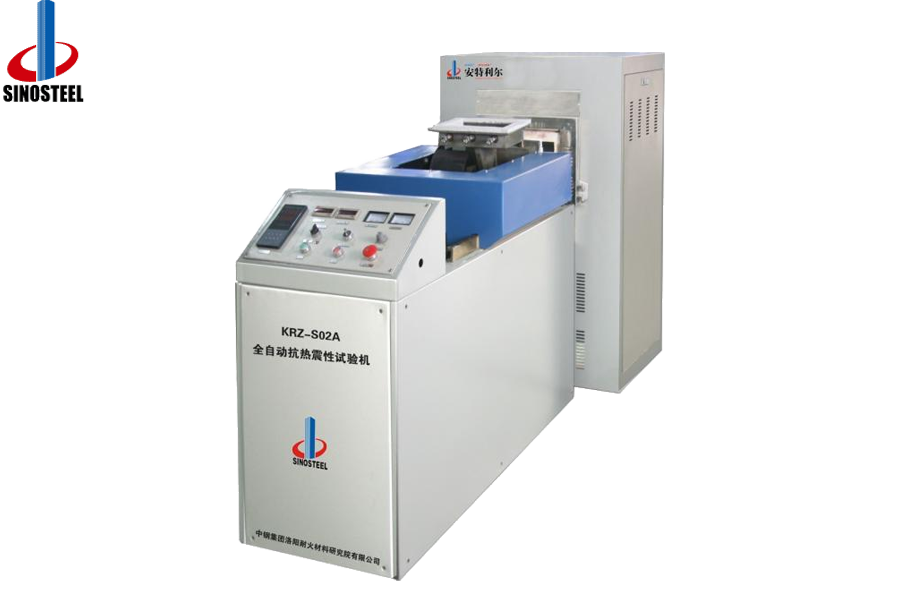


Testing methods for thermal shock resistance of materials include water rapid cooling method, compressed air rapid cooling method, air cooling method, residual strength method and so on.
The sizes and shapes of the specimens vary, including standard bricks, small squares, columns, spheres, plates, tubes, rods and so on. In the test environment of rapid temperature changes, the resistance to damage is called thermal shock resistance, resistance to rapid heating and cooling, or thermal shock stability.
According to the above characteristics, the KRZ tester can satisfy the test of refractory materials undergoing rapid cooling and heating processes. The repeated action of internal thermal stress will cause structural damage, cracks or even spalling. It is well suitable for testing the thermal shock resistance of materials.

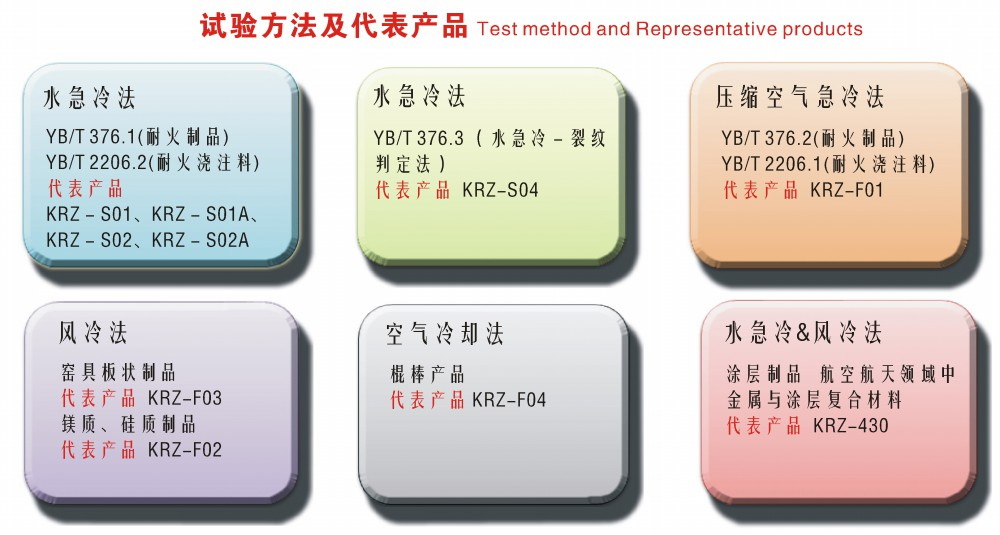
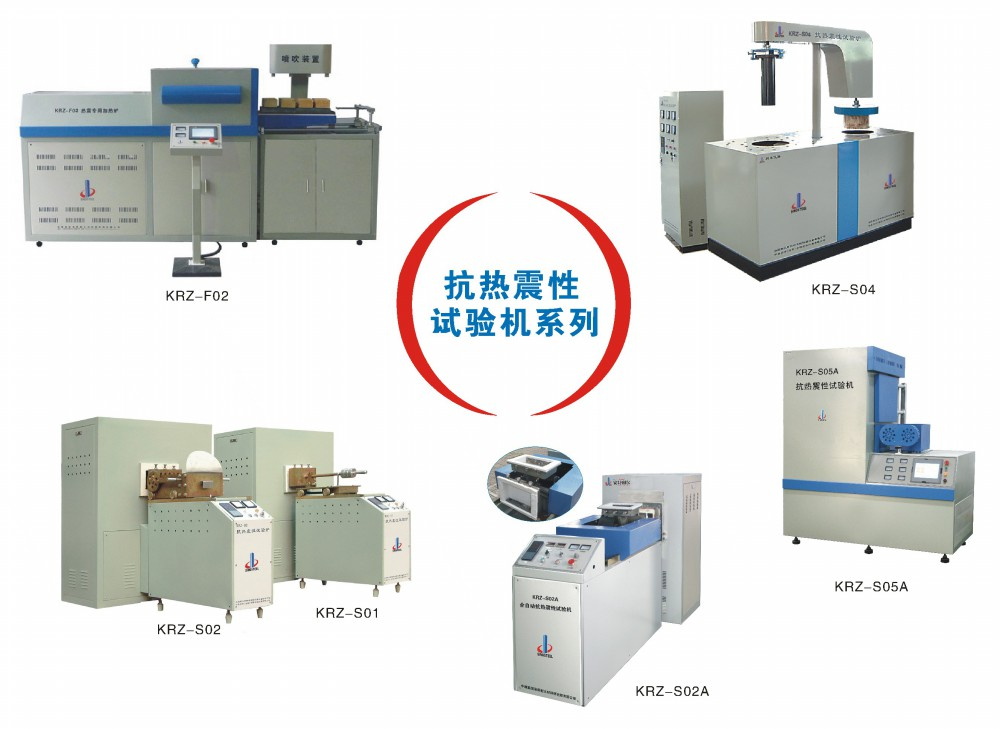

Main Parameters
Model Specifications | KRZ-S01 | KRZ-S01A | KRZ-S04 | KRZ-3D | KRZ-F01A | KRZ-S05 |
Service Temperature,℃ | 1100 | 1100 | 950 | 1200 | ||
Cooling Medium | Water Cooling | Water Cooling | Air Cooling | Air Cooling and Water Cooling | ||
Sample Material | Standard Bricks such as High Alumina, Clay | Tubes | Standard Bricks such as High Alumina, Clay | Magnesium-based, Silicon-based Materials | Metal Coatings | |
Sample Number | 3pcs | 1pc | 3pcs | 3pcs | 6pcs | |
Operation Mode | Manual | Automatic | Manual | Visual Automatic | Robotic Automatic | Automatic |
Product Message Consultation